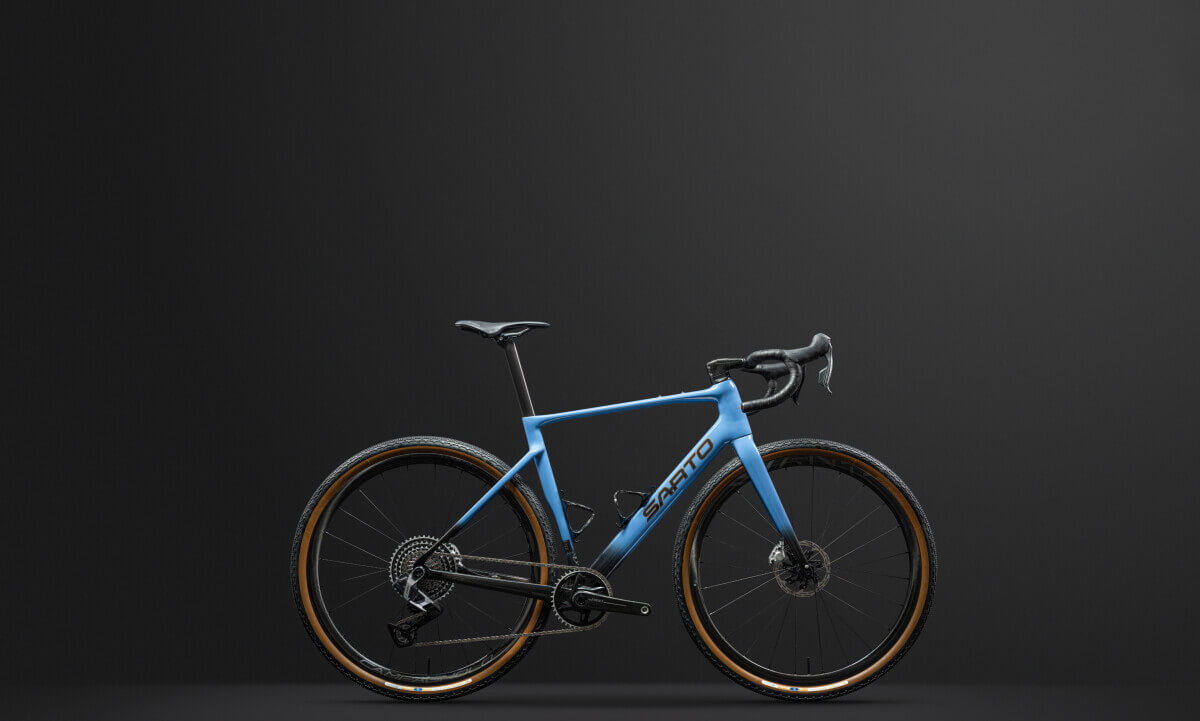
Sometime this season, sooner rather than later, we had hoped to introduce San Francisco's Skyler Taylor as a sponsored Sarto racer. But recently, events overtook us, with Skyler winning the Elite Men's Highlands Gravel Classic in Arkansas on his first outing aboard his custom Raso Gravel. If we sound surprised, it's not because we lacked faith in Skyler's talent. There was simply no time. He'd only had his new bike for a week, and it was a frame when he received it, not even a complete build. Given the tight schedule, we weren't sure he'd use it at the Highlands event. But he did, and he won—a sensational start. Before we get to the interview, we'd like to thank our Bay Area partner, Above Category, who helped get Skyler's bike built and race-ready.


And on that note, let's hear from Skyler, who we spoke to a few days after the event to hear how his race shook out, how his first year as a full-time professional competing on the U.S. gravel scene is shaping up, his first impressions of the all-new Sarto Raso Gravel and the extensive testing that led him—and Sarto—to conclude that wide tires are the way to go.

photo

Sarto: Hello Skyler, good to see you. 

Skyler: You, too. Thanks for having me.

Sarto: First of all, congratulations on your win at the Highland Gravel Classic. You only got your new Sarto Raso Gravel a week before the race. How did that affect your race preparation?

Skyler: Thanks! It was definitely tight timing. Robert (from Above Category) did an amazing job building the bike up in less than a day. I only got two rides on it before race day. One ride was in Arkansas, so I committed fully at that point—no backup bike. Thankfully, it felt really good right away.

Sarto: How did the bike feel compared to your previous gravel bike?

Skyler: The team at Sarto did a fantastic job replicating my geometry, so it felt natural pretty quickly. Within that first ride, I felt right at home, which was crucial for confidence heading into the race. It’s an incredibly comfortable bike, expressive, confidence-inspiring and immensely quick.

photo
photo

Tell us about your recent visit to Sarto's factory in Italy. What was that experience like?


Skyler: Visiting the Sarto headquarters was amazing. I'd never seen bike frames being made, so getting a firsthand look at the craftsmanship behind every tube was pretty special. Tommaso and Enrico were incredibly welcoming, showing me their whole process. Of course, I also had a full bike fit while I was there, which we then compared to my existing geometry to marry everything up.


You played a significant role in developing the Raso Gravel. What kind of input did you provide?


Skyler: The bike was already in development when I started talking with Sarto about a sponsorship deal. But from the outset, I had some very specific requirements, especially around tire clearance, and Enrico was keen to learn about my experiences on the race scene that informed my thinking. I suggested designing the bike around larger tires, specifically the 2.2 Continental Race Kings, because extensive testing showed they performed best across various terrains. The team were extremely receptive and enthusiastic about the idea, literally shaping the entire design of the Raso Gravel around these suggestions. They carefully integrated my ideas about geometry, clearance, and component compatibility, often tweaking other aspects of the frame to complement these key requirements. The level of customization and openness was unlike anything I've experienced with other bike brands. Their responsiveness to rider input was incredibly impressive. 


Can you talk about the testing that led you to conclude that wider tires are generally the better choice for gravel racing?


Skyler: A group of friends and fellow racers did extensive real-world testing, comparing various tire sizes on different surfaces. We consistently found that wider tires, specifically mountain bike tires like the 2.2 Continental Race King, rolled noticeably faster, even on smooth, paved roads. This surprised us because narrower tires often feel faster due to the perception of speed you get from vibrations through the touchpoints, but the data clearly showed wider tires performed better overall. It was eye-opening and led to the decision to design the Raso Gravel with the capacity to accept larger tires.

photo

Can you run us through your setup for the Highland event?

Skyler: Sure. For the drivetrain, I switched to SRAM's new gravel-specific setup with tighter gearing (10-46 cassette). For wheels, I chose Duke, which I've been testing for a while now—they're handmade and perform really well. 

We've talked quite a bit about what tires you're using. People might also be interested in the pressure you're running. 

Skyler: I ran very low pressure this past weekend—18 PSI front, 19 PSI rear. It felt almost like having suspension but with good resistance to flats, control and confidence, which was critical on the course.

photo

Walk us through how the Highland Gravel Classic race unfolded for you.


Skyler: Early on, about 12 miles in, a group of four, including Tim McBirney and me, got away. Tim is an incredibly strong time trialist, so I knew we had a solid breakaway. We also had an excellent Colombian climber with us, so we had our bases covered. There were several short, steep climbs early on - the sort you sprint up but allow little opportunity to distance anyone. With my mountain biking background, I could push the pace on the downhills, which were quite technical, helping to stretch the group. The final decisive climb, about 10 miles from the finish, whittled the group down to just Tim and myself. We cooperated briefly to solidify our lead, but the finish was tricky—a long stretch of deep grass that I knew from my pre-ride felt like riding through sand. Knowing Tim's strength on flat terrain and noticing how I could never quite distance him, I stayed on his wheel through this section and launched a late sprint about 50 meters from the line. That late kick was enough to secure the win. Had I gone early, I would have risked Tim coming back at me before the line.


This is your first year racing full-time. What has that transition been like?


Skyler: Yeah, this is the first time I've gone all in on racing. I've always balanced training with either school or work—most recently working as a software engineer in tech. Making the switch to focus solely on cycling was a bit of a leap of faith, but it's been incredibly rewarding. I actually feel less stressed now. I have the time to focus on recovery, travel, equipment, and the little details that can make a difference in performance. It's a big change, but one that's made me a better rider, and I'm really enjoying the lifestyle so far.


Even so, when you were working and racing, you got some great results. 


Skyler: Thanks. A bit mixed overall, but some of my better results include getting 1st at the Mendo Hopper, part of the Grasshopper Adventure series, 2nd at Lake Sonoma MTB and 3rd at Huffmaster Hopper, part of the same Grasshopper series, 2nd and two stage wins at the Leadville stage race, and 19th at the USA Gravel National Championships.

photo

Sarto: What’s next on your racing calendar?


Skyler: My main focus is now Unbound Gravel. I have a short break, then start a three-week training block. After Unbound, I'll be targeting races in the Gravel Earth Series, including Lost and Found and Oregon Trail. It's an exciting schedule ahead.


Sarto: What's your tire plan for Unbound Gravel?


Skyler: Unbound can be tricky due to its notoriously muddy conditions. I plan to stick with the 2.2 Continental Race Kings if it's relatively dry, as the volume helps protect against sharp rocks. However, if it looks especially muddy, I'll consider downsizing slightly to ensure better clearance. It's a bit of a waiting game to see how the weather shapes up closer to race day.


Sarto: We'll have our fingers crossed for a dry day! Thanks for taking the time to speak to us, Skyler, and best of luck for the season ahead. 


Skyler: My pleasure!


Article by Pete Harrington - Ph. Jim Merithew |